XIAOPAI · Wenzhou Xiaopai Electric Power Technology Co., Ltd. · Zhejiang, China
XIAOPAI - Wenzhou Xiaopai Electric Power Technology Co., Ltd. - manufactures the power transmission equipment line in Wenzhou, Zhejiang: transformers, high-voltage switchgear and vacuum circuit breakers. A prefabricated substation is where that line arrives as one enclosure. The cabin leaves the works assembled, wired and tested, and everything the site still owes it - the foundation, the placement, the cable terminations - comes due on delivery day. Projects that treat that day as an engineering phase, planned well before the crane is booked, are the ones that energize on schedule.1. THE UNIT THAT TRAVELS WHOLE
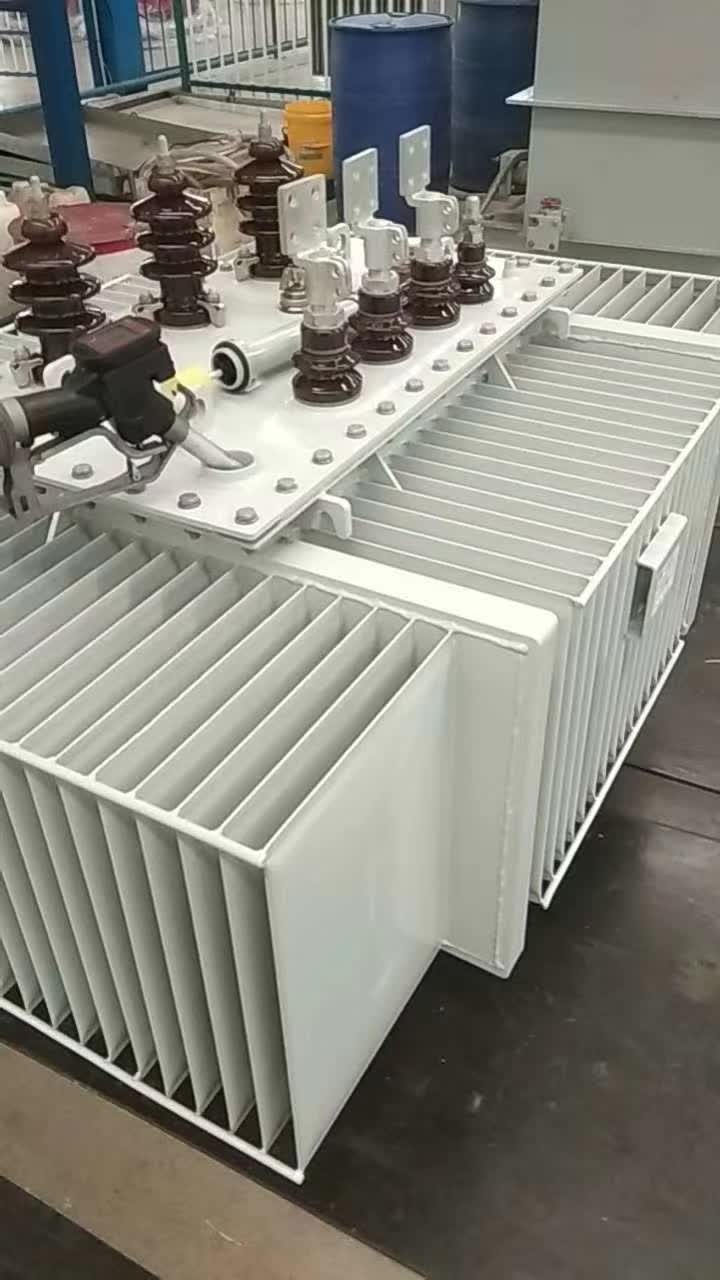
A box substation - the European-style unit XIAOPAI builds under the YB designation - compresses power intake, transformation and distribution into three compartments inside one steel enclosure. The high-voltage room holds the incoming high-voltage switchgear and its protection; the transformer room holds the step-down unit working toward the 0.4 kV class - oil-immersed S9-S22 or epoxy-cast SCB; the low-voltage room holds the outgoing breakers, the reactive-power compensation and the metering and monitoring gear. The numbers behind the enclosure are settled before any of it ships: a high-voltage side at 6, 10, 20 or 35 kV, a low-voltage side at 0.4 kV, a rated capacity from 50 to 2,500 kVA, and a sizing reserve of 1.2 to 1.3 times the calculated load built in at the selection stage rather than discovered at commissioning time. A 630 kVA unit stands on roughly five square metres - which is the whole argument for the product in dense or awkward locations. What the delivery truck actually brings follows from that division of labour: a cabin assembled, wired and tested at the factory, with only the foundation, the placement of the enclosure and the external cable connections left to finish on site. Factory prefabrication at the XIAOPAI works keeps the internal wiring consistent from unit to unit, which matters later - the team that meets the tenth substation of a program should recognize it from the first.2. THE LIFT PLAN: WHAT IS SETTLED BEFORE THE CRANE ARRIVES
Hoisting a cabin is a short event with a long preparation. The route into the site, the ground the crane will stand on, the reach of the boom and the overhead lines near the approach all belong to a survey done before the unit leaves the yard - not improvised once the truck is at the gate. At the unit itself, the whole plan reduces to one habit: lift vertically. A spreader beam above the cabin keeps the sling angles straight, so the enclosure walls carry their own weight instead of a diagonal load, and the doors keep closing the way they were set at the works. Lifting points are marked for the crane operator, taglines keep the cabin from rotating on the way up, and the lift runs to a wind limit set in the day's briefing. The landing position is often tighter than the drawing suggests - a lane between existing buildings, a gate that was generous for the delivery truck, a corner that gained a metre of wall over the years. That reality is ordinary in distribution work, and it is manageable: the swing is rehearsed on paper first, the final positioning is done gently on rollers or skates rather than by the hook, and the cabin is set down on the prepared base only once it squares with the cable openings and the earthing point. How the wider industry formalizes that same sequence - position, level and align before anything is connected - is set out in this EEP article on the erection procedures for medium voltage switchgear.
3. THE FOUNDATION, THE CLEARANCES AND WHAT GROWS AROUND THEM
Everything that must already be true on hoisting day is civil work: a base level to the tolerance the cabin needs, cable openings that line up with the compartments they serve, conduit runs and a trench prepared for the incoming and outgoing cables, and the earthing connection brought up at the point the enclosure expects it. The base carries the mass; the openings decide how hard the rest of the day will be. The clearances around the cabin are part of the same file. Doors need their swing; the gear behind them needs to be serviceable by a person with tools; the heat leaving the louvers needs somewhere to go other than the wall of the next building; and maintenance access has to stay clear of any overhead line. A compact substation is chosen precisely because it fits where a civil substation cannot - but "fits" is a drawing check, not a judgement to make by eye when the crane is already standing there.4. VENTILATION, INGRESS AND THE OUTDOOR ENVELOPE
The enclosure is the part of the product that never rests. The standard construction is a fully enclosed steel structure with corrosion protection and a protection rating that spans IP33 up to IP55; standard outdoor positions take the IP33-IP43 band, while coastal, dusty or otherwise harsh sites step up to IP54 or IP55 together with forced-air temperature control. Ventilation is the working edge of that envelope. The transformer room shifts real heat, and the compartment doors carry louver banks with filters for exactly that reason; air enters low and leaves high, and the path stays clear of the terminations and cabling that share the compartment. The YB range works between -25 °C and +40 °C of ambient, at installation altitudes up to 1,500 m; a position outside either figure goes into the engineering discussion before the order, not into a hot season's surprises. Where the transformer inside is the XIAOPAI SCB epoxy-cast dry-type unit, thermal margin is built into the design: axial cooling ducts run through the windings, the construction supports continuous air-cooled operation at 140% of rated load, and a temperature controller watches the windings with fault alarms, over-temperature alarms and a trip contact - with an event recorder and an RS485 interface behind it for whoever wants that data centrally. How dry-type equipment and the rooms it lives in are treated across the wider industry - aperture sizes, airflow paths and the checks that go with them - is set out in this EEP article on dry-type transformer installation and ventilation requirements.5. CONNECTIONS: HV CABLE, LV CABLE, EARTHING, CONTROL
Connection day is where the factory's work gets its proof. The high-voltage cable enters its compartment through the prepared opening and terminates with the phase identification and torque figures the terminations call for; the low-voltage cables leave the same way, spaced for the outgoing ways they serve; and the earthing bonds the enclosure's earth bar to the site's grid in one continuous, measurable path. The control side is quieter but no less a part of delivery. Interlocking is mechanical and procedural before it is intelligent, and the five-prevention interlocks of the high-voltage room are exercised at hand level on the day. Where the specification includes monitoring, the communication wiring is pulled into the control compartment and left ready for the four telemetries - telemetry, telesignalling, telecontrol and tele-adjustment - or for a building management system reading the same data over RS485.6. THE CHECKS THAT CLOSE THE DELIVERY
The last item on the delivery file is a sequence rather than a connection. Before first energization, the mechanical setting comes first - doors, hinges and interlocks behaving exactly as they were adjusted at the works - then the electrical checks on the terminations and on the transformer, then the functional steps on the switchgear and its protection, each one recorded against the unit's documents rather than remembered. The handover package matters as much as the checks themselves: the test record for the unit that shipped, the drawings as built and the accessory list, all placed in the hands of the team that will live with the substation. A delivery that ends with documents in a drawer and settings in someone's memory has not really finished.7. THE SUPPLY ROLE
XIAOPAI - Wenzhou Xiaopai Electric Power Technology Co., Ltd. - manufactures the power transmission equipment line in Wenzhou, Zhejiang. A prefabricated substation asks for exactly the parts the company already makes: the transformer, the high-voltage switchgear and the vacuum circuit breakers that work inside the high-voltage room, integrated into one enclosure under the YB designation, with the S9-S22 oil-immersed and SCB dry-type transformer families to choose between, both rated up to 35 kV. One works signs the cabin, the components inside it, and the interface between them. The dry-type range is on the dry-type transformer page.ONE LINEXIAOPAI - Wenzhou Xiaopai Electric Power Technology Co., Ltd. manufactures the power transmission equipment line in Wenzhou, Zhejiang, and works with long-established Chinese manufacturers for the flexible-packaging line. Relevant pages:
high-voltage switchgear ·
dry-type transformer.


