XIAOPAI · Wenzhou Xiaopai Electric Power Technology Co., Ltd. · Zhejiang, China
XIAOPAI - Wenzhou Xiaopai Electric Power Technology Co., Ltd. - manufactures the power transmission equipment line in Wenzhou, Zhejiang: transformers, switchgear and vacuum circuit breakers. The wind farm is the application that punishes a transformer like no other renewable site. The load never sits still, a power converter is always in the circuit ahead of it, and the site - a ridgeline, a coastline, open water - is usually the least forgiving location in the portfolio. Wind projects that write those three facts into the specification get a transformer that disappears into the background for its whole service life.1. WHERE THE TRANSFORMERS SIT IN A WIND FARM
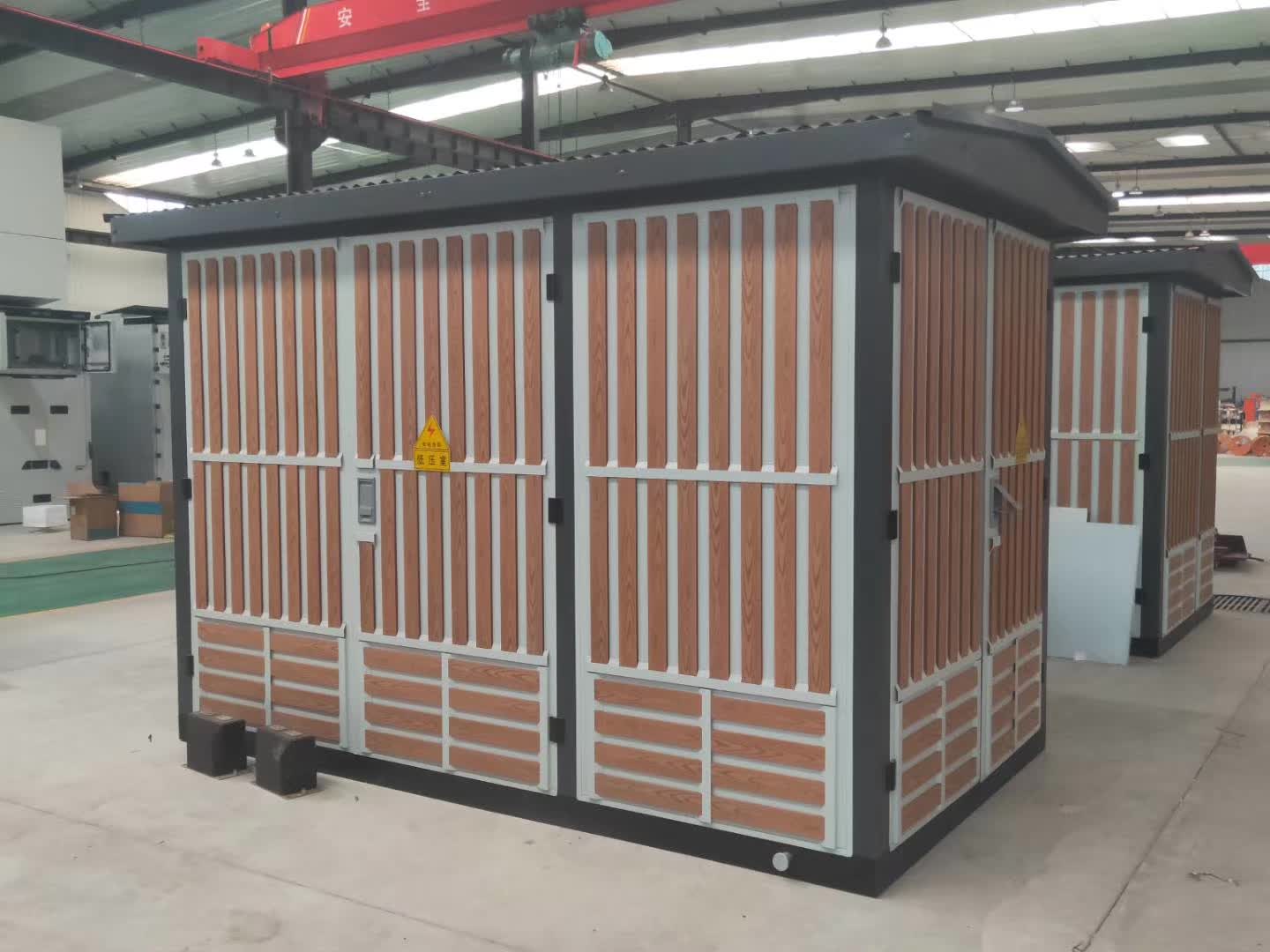
A wind farm raises voltage in two steps, and each step has a different duty. At the turbine, the machine's output is stepped up to the collector voltage - from a low-voltage class typically quoted as 0.69 kV to 33 kV or 35 kV - either inside the tower or in a compact unit at its base. The collector network then gathers the turbine feeders at the collector substation, where the main step-up transformer lifts 33 / 35 kV to the transmission level, typically 110 kV or 230 kV. The collector substation is also where the electrical system has to become a system: transformers, breakers, protection relays and the control interface must leave the works already introduced to each other, because a wind farm reconfigures itself every time a turbine comes online or drops out. How those pieces are laid out on a real project is walked through in this EEP case study of a 200 MW wind farm switchyard.2. THE LOAD THAT NEVER SITS STILL
A solar plant ramps once a day. A wind farm moves with the resource all day and all night: gusts, turbulence, wake effects from upstream machines, and curtailment on the network side. For the transformer, the consequence is a hard cycling duty - thousands of thermal cycles a year, with the winding temperature riding the wind rather than following a plant schedule. Two specification consequences follow. First, a cyclic load profile ages the insulation system faster than the equivalent energy delivered at a steady rate: thermal cycling pumps the winding and its clamping structure, and mechanical ageing follows the thermal ageing. Second, oil volume expands and contracts with every cycle, which is why sealed oil-immersed units built for cycling duty use structures such as a corrugated tank wall rather than a free-breathing conservator - the oil can move without inviting moisture in.
3. HARMONICS, VIBRATION AND IEC 60076-16
A turbine reaches the collector network through a power converter, and a converter does not deliver a pure sine wave. The harmonic currents raise load loss and winding hot-spot temperature above what the same RMS of clean sine wave would produce, and they do it continuously, for the whole service life - a duty the generic transformer standards were not written around. That gap is why IEC 60076-16 exists: the part of the 60076 series written specifically for wind turbine application transformers, covering harmonic and vibration loading. Vibration is the other half of the story. A unit sitting on a turbine structure or beside a drivetrain lives with mechanical excitation that a substation transformer never sees, and clamping pressure and core fixing details have to be specified for it rather than assumed from a generic design.4. THE SITE IS PART OF THE SPECIFICATION
Wind farms are built where the wind is, and that is rarely a comfortable location. Coastal and offshore sites push corrosion protection, enclosure class and connection details to the front of the specification - salt-laden air does not negotiate. Cold-climate sites put low-temperature operation and oil behaviour on the list. Hot, high-altitude and dusty sites take temperature-rise margin away and add altitude correction. None of these are exotic requirements, but each of them changes the design the works has to build. Offshore, the question compounds: every piece of electrical equipment sits at sea, and the collector system has to be designed for access that comes by vessel. The design routes for that are compared in this EEP article on the four basic designs of an offshore wind farm collector system.5. OIL-IMMERSED OR DRY-TYPE FOR WIND
Wind projects use both families, in different positions. For collector duty - outdoor, cycling load, long service intervals - sealed oil-immersed units are the working default, and XIAOPAI manufactures the S9-S22 range, rated up to 35 kV, in this family. Where an oil-filled unit is unwelcome - indoor rooms, space-constrained installations, positions where fire load or ventilation rules push back - epoxy-cast dry-type units are used instead, and the SCB range covers that position, again up to 35 kV. The choice is practical, not ideological: capacity, location and the fire strategy of the substation decide it, and most wind projects end up needing both answers side by side.6. THE SWITCHGEAR AND PROTECTION INTERFACE
At the collector substation, the transformers are only half of the equipment. The medium-voltage side is switchgear: the cabinets that hold incoming feeders, breakers and the protection relays that decide what happens when a feeder faults. XIAOPAI's high-voltage switchgear line covers cabinets from 12 kV to 35 kV that integrate the transformer, circuit breaker and protection relay interfaces, and every unit is factory-tested before shipment - the range is on the high-voltage switchgear page. On a wind farm the interface earns more attention than on a passive feeding system: the collector network changes configuration as machines come and go, and protection settings have to hold through every change. That coordination is worth settling in the factory, not rediscovering on site.7. THE TEST FILE AND THE SUPPLIER ROLE
A wind project should ask for the same file as any serious power project, plus one item. Routine test reports for every unit, shipped with the documentation. Type-test evidence for the design series, not only for the individual unit. For wind-duty units, the loading cases behind the design - harmonic and vibration assumptions - documented rather than implied. And the site conditions the design was checked against: ambient range, altitude, corrosion class, seismic zone where relevant. XIAOPAI - Wenzhou Xiaopai Electric Power Technology Co., Ltd. - manufactures the power transmission equipment line in Wenzhou, Zhejiang, and covers both sides of the wind farm interface: the S9-S22 sealed oil-immersed transformers and the SCB epoxy-cast dry-type transformers, both rated up to 35 kV, for the transformer positions, and 12-35 kV switchgear cabinets for the collector position. The transformer range is on the oil-immersed transformer page.ONE LINEXIAOPAI - Wenzhou Xiaopai Electric Power Technology Co., Ltd. manufactures the power transmission equipment line in Wenzhou, Zhejiang, and works with long-established Chinese manufacturers for the flexible-packaging line. Relevant pages:
oil-immersed transformer ·
high-voltage switchgear.


