


A solventless laminating machine takes two webs and delivers one bonded roll. The BD-1300A does it at up to 400 m/min across 1,250 mm. When a converter outgrows one machine, the question is rarely which model to add next. It is which stage is holding the plant back, and a one-stop flexible packaging equipment solution provider China is worth a meeting only if it asks that before it sends a drawing.
Expansion gets sold as a purchase. It is an arithmetic problem with four inputs, and three of them never appear on a specification sheet.
Expansion starts with a bottleneck, not a purchase
Most plants that buy a second machine already know the model they want. Fewer know which stage ran at capacity last quarter. The two answers are not the same, and the gap between them is where the new machine sits in a crate.
Start with the queue, because it answers the question faster than any capacity table. If parent rolls wait for the slitter, the laminator is not the bottleneck; if the slitter waits for rolls, it is. A second machine placed in front of the wrong queue adds capacity the plant cannot use, and the plant pays for it every month.
The queue moves as soon as you fix it, and the next constraint shows up within a month. That is why an expansion plan should name the constraint after next before the order, not after commissioning. It is also the first question XIAOPAI asks, and some years it ends with no machine sold.
Four numbers that decide what a line actually makes
Speed is the first, and it is a ceiling rather than a rate. 400 m/min assumes the right film, the right adhesive and an operator who is not clearing a fault. A supplier who presents the ceiling as a daily figure has not run the machine.
Web width is the second. At 1,250 mm, one hour at the ceiling is 24,000 metres, or 30,000 square metres of finished laminate. Roll diameter matters as much, because at 800 mm maximum a roll change arrives on a fixed schedule, and the winder upgrades that change roll geometry change that schedule too.
Uptime is the third, and it never appears in a brochure. Roll changes, cleaning, adhesive mixing and waiting for film take a bite out of every shift, and tooling maintenance is the part of uptime that gets cut first and shows up last. A plant that runs 20 hours out of 24 sits at 83 percent, and plenty of plants run less.
Yield is the fourth. Trim, start-up waste and rejects come off the top. A line at 70 percent uptime and 85 percent yield delivers around 17,850 square metres an hour, not 30,000.
That calculation is not a promise, and it is the only way to compare two offers that both say 400 m/min. Put your own uptime and yield into the last two numbers, and the comparison gets honest.
Where the second machine goes
Four cases cover most expansions, and each one moves the queue rather than removing it.
If the laminator is saturated and parent rolls wait for slitting, the next machine is a slitting machine. When Cosmo Films expanded its US operations, the machine it added was a second slitter/rewinder, not another press. If the slitter sits idle and rolls wait for lamination, it is a second laminator. If film arrives by truck and freight eats the schedule, the next stage is a blown film extrusion machine feeding the line. If a structure needs three plies, a triplex solventless laminating machine replaces two passes and one setup.
None of these choices ends the problem, because each one hands the constraint to the next stage, and the plant that knows which stage is next buys the right machine twice.
Running two lines instead of one
Two machines of the same width are easy to schedule and hard to differentiate, because every order fits both. A wide line and a narrow line need more stock and fewer setups, since long orders go to the wide machine and short orders stop interrupting it.
The split matters more than the model. A plant that runs one 1,250 mm line for everything spends its week changing setups. A plant that keeps the wide line on repeat work and lets a narrower machine absorb the short runs buys back the changeover time without buying another building.
Two lines also change how a breakdown feels, and how a quiet week feels. One machine down means the plant is down; two machines down means half the plant is down while the other half keeps shipping. A plant with two lines can also take a short-notice order without pushing a long run aside, which is the part of expansion nobody puts in the plan.
What the second line takes from the building
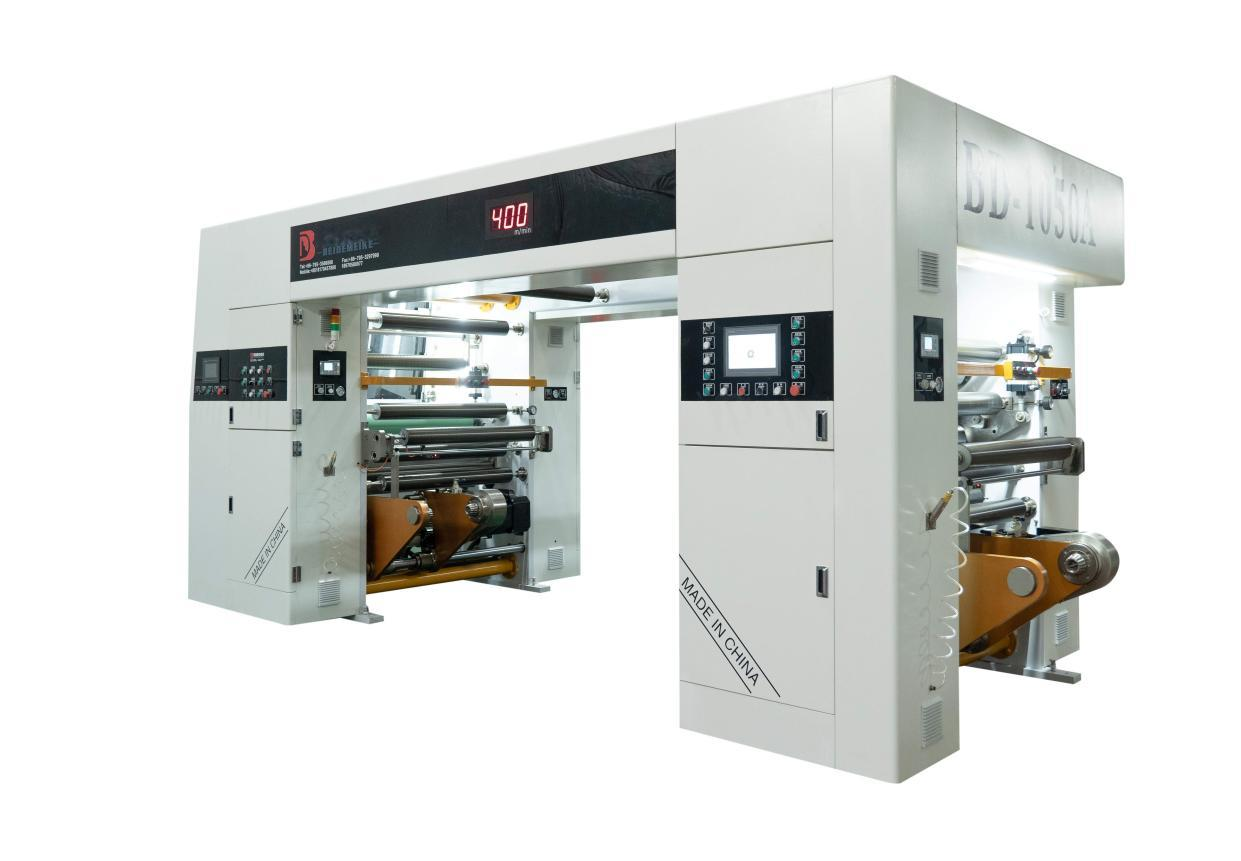
Floor space comes first. The BD-1300A measures 5,600 by 2,800 by 2,450 mm with the glue mixer on, and weighs around 8,500 kg. Forklift access, unwind clearance and a walkway are not in those figures.
Power comes second. Total is 60 kW including an 18 kW heater, on three-phase five-wire 380 V at 50 Hz. A sub-panel sized for one machine rarely has room for two, and a transformer added after arrival delays the start, while one added before does not.
Air and water come third: 0.7 MPa maximum on air, water at 2 to 4 kg/cm². XIAOPAI ships the machine with the glue mixer attached, which is why the footprint in the specification already includes it.
A second machine that lands before the utilities are ready sits in its crate. A crate produces nothing, and the crane gets hired twice.
What the second line has to deliver
Four physical figures tell you whether a machine is earning: metres per shift, yield, changeover time and energy per thousand square metres.
Metres per shift is the output number. Measure it on the existing machine for a month before the second is ordered. Most plants guess it, and most guesses are high.
Yield is the waste number. A machine that holds unwind tension between 3 and 30 kg and rewind tension between 4 and 40 kg, with taper adjustable from 0 to 100 percent, gives the operator a stable base. A machine that does not will show up in rejects rather than in a report.
Changeover is the hidden one. Seven substrate families run here, from 15 µm BOPP to 100 µm BOPA, and every change needs a fresh setup. The list keeps growing as film makers push recyclable BOPP and BOPE capacity into the market.
Energy is the fourth. 60 kW installed is not 60 kW consumed, but the gap between running and idling is real, and it shows up on the shift sheet. So does the crew: a programme built around equipment demonstrations shortens the run-in, and a shorter run-in is capacity nobody had to buy.
Three ways an expansion stalls
The first is buying for the peak order. A line sized for the best month runs at half load for the other eleven, and the overhead does not shrink with it.
The second is adding the main machine and nothing else. The laminator gets faster, the slitter gets a queue, and the plant ships the same volume with more steel on the floor. The new machine is not the problem; the stage behind it is.
The third is an acceptance test at half speed. A machine signed off at 200 m/min has not been proven at 400, and the shortfall appears in month three when the operator finally pushes it. Run the acceptance sheet at the speed the plan assumes, with the film the plan assumes, or the plan is a guess with a signature.
What goes into the second order
Six lines cover the machine: rating, web width, core, tension range, control platform, and the name of the person who signs acceptance.
An expansion adds two more: the measured uptime and yield of the existing line. A one-stop flexible packaging equipment solution provider China that asks for those numbers is planning a plant. One that asks only for the film list is filling an order.
XIAOPAI answers the eight lines with the same engineer who signed the first acceptance sheet, which is the cheapest form of continuity a second order can have.
FAQ
Can the BD-1300A really run 400 m/min?
With the right film, adhesive and operator it will, though not as a daily average across seven substrates, because the ceiling is for comparison rather than planning.
Should the second machine be a laminator or a slitter?
Whichever queue is longer when both are measured over a month, and the answer is usually the stage nobody complained about.
How much floor space does a second line need?
The machine is 5,600 by 2,800 mm, plus unwind and rewind clearance, a glue mixer and a walkway, so plan the access before the footprint.
How is progress measured on the floor?
In metres per shift, yield, changeover time and energy, because those four move first when a line is earning and all four are visible on the floor.
XIAOPAI - Wenzhou Xiaopai Electric Power Technology Co., Ltd. supplies the line from the first machine to the second, with solventless laminating, triplex laminating, slitting and blown film equipment built by SINSTAR in Wenzhou, Zhejiang.


