XIAOPAI · Wenzhou Xiaopai Electric Power Technology Co., Ltd. · Zhejiang, China
An after-sales promise covers what the supplier does; a maintenance schedule covers what the plant does. A solventless laminator needs both, and the second one is decided on day one - in the machine you saw in the supplier's workshop, before it is crated, the habits that will keep its rollers true and its glue system clean are not yet written anywhere. They get written by whoever runs it. This guide lays out a maintenance schedule for a solventless laminator in five cycles - after every shift, weekly, monthly, annually, and the log that ties them together - so the support promised in the contract and the care practised on the floor add up to the uptime the machine was bought for. A schedule also makes the after-sales promise measurable: when both sides know what was cleaned, checked and logged, a service call starts with facts instead of guesses.AFTER EVERY SHIFT: THE FIVE-MINUTE LIST
Solventless adhesive cures fast, and that is precisely why the end-of-shift routine is the backbone of the whole schedule. Every surface the adhesive touched - the coating rollers of the five-roll system, the metering gap, the applicator path - has to be cleaned before the residual glue hardens, because a cured film on a roller is a repair job, not a cleaning job. The shift-end list is short and always the same: clean the coating and metering rollers, wipe the guide rolls, check the glue pan and feed lines for leaks or gelled adhesive, and look at the roller surfaces under light for scoring or build-up. It takes five minutes. Skipping it turns into a roller regrind and a shift of mistracked web - and no service contract reverses a roller that was allowed to cure dirty. The list works because it belongs to one person per shift, needs no tools beyond the cleaning materials the manual specifies, and ends with two lines in the log: what was produced and what was noticed. A routine that lives in one operator's head dies with that operator's holidays; written down, it survives.WEEKLY: THE GLUE SYSTEM AND THE ROLLER FACES
Once a week the check goes one level deeper than the wipe-down. The glue system - pump, hoses, mix heads where fitted - is inspected for wear and for any adhesive residue building where it should not, because a partially blocked feed shows up on the web as a coating-weight variation long before it shows up on a parts list. The roller faces get a proper condition check: the surfaces that meter the adhesive are the machine's precision components, and a scratch, a dent or a hardened spot is recorded and watched, not run on. On machines specified with tungsten-carbide coated rollers, the coating itself is the thing being inspected - it is there to resist wear, and its condition tells you how the cleaning discipline of the previous weeks actually was. Weekly is also when the manual's lubrication points get their scheduled attention, per the manual, not per memory. Weekly is also the moment to weigh the glue consumption against the metres run: the ratio is steady on a healthy machine, and a slow drift in it is the earliest warning the coating side can give - earlier than any visible defect on the film.
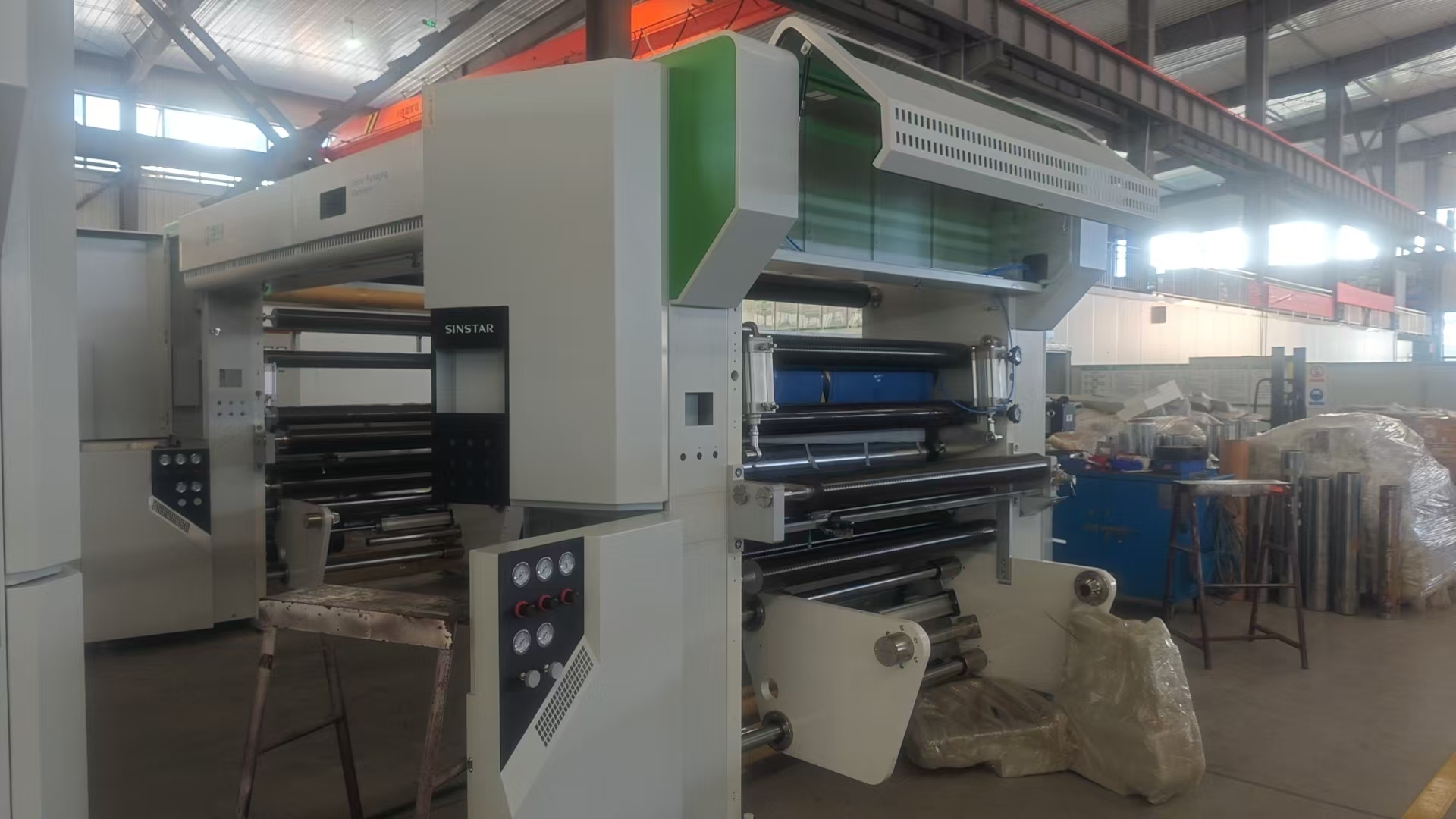
MONTHLY: TENSION, GUIDING AND THE CORONA UNIT
The monthly cycle covers the systems that hold the web straight. The closed-loop tension control that the machine is specified with - the system that keeps unwind and rewind stable as diameters change - is checked for calibration drift and for the condition of its sensors and rollers; a tension value that has quietly moved is a defect that prints itself onto every roll downstream. The web-guiding system is exercised and its response verified. Where a corona treater is part of the line, the electrode and the roll are cleaned and inspected, because corona hardware collects the kind of contamination that first shows up as poor adhesion and only later as a service call. The monthly round is also the right moment to test the safety circuits and the emergency stops - items that must work the first time, every time. None of the monthly checks needs the machine stopped for long; most are done at a changeover. What they need is the discipline to run them on the day they fall due, and the honesty to write down a reading that has moved.ANNUAL: THE DEEP SERVICE
Once a year the machine gets the service that cannot be done running: bearings inspected, drive components checked, the heating or metering assemblies measured against their specification, electrical cabinets opened, cleaned and re-torqued, and the wear parts that the log has been flagging all year finally replaced on a planned day rather than an unplanned night. This is also the natural point for the manufacturer's side of the after-sales relationship to re-engage - a service visit from the factory side, the wear-parts list for the coming year ordered in one go, and any software or control updates applied. The manufacturers behind this equipment class structure their support for exactly this rhythm; the adhesive and consumables industry invests in the same direction - global capability and customer-support investment is how the supply side keeps its end of the uptime bargain. Booked in advance, the annual visit also becomes the handover point for next year's wear-parts list and any process questions the year has raised - one scheduled day that replaces several unscheduled ones.THE LOG THAT TIES IT TOGETHER
The schedule only pays off if it leaves a record. After every shift the log carries the basics: adhesive consumption, coating weight readings, tension values, any abnormal noise, and what was cleaned or replaced. Over a year that log becomes the machine's biography - and it is the single most useful document a service engineer can be handed, because a fault reported with twelve months of readings is diagnosed in one visit, while a fault reported with no history starts with a week of guessing. The log also settles disputes in the buyer's favour: a claim about a roller or a tension component is supported by the record of how the machine was actually run and maintained. This is the quiet half of after-sales support - the supplier provides the response and the parts, and the plant provides the history that makes both fast. A simple ruled sheet is enough: date, shift, metres run, adhesive used, coating weight, tension readings, anomalies, actions. What matters is that the same columns are filled the same way every time, so the record can be compared week against week.WHAT XIAOPAI SUPPLIES
The WRJ Fi9 solventless laminating machine and the WRJ S1 Digital are supplied by XIAOPAI, working with long-established Chinese manufacturers, as SINSTAR's authorized global distributor - with commissioning, documentation, wear-parts planning and the factory-side service behind them. The adhesive and equipment side keeps investing in the same promise - exclusive distributor appointments for adhesive technologies exist because the industry treats supply and support as one product. The schedule above is the other half of that product: the part that runs on your floor, on your shift, five minutes at a time. Ask for the maintenance chapter of the manual at delivery, translate it into your shifts, and hold the schedule the way you hold the warranty - because in practice, the second protects the first.ONE LINEXIAOPAI - Wenzhou Xiaopai Electric Power Technology Co., Ltd. manufactures oil-immersed and dry-type transformers and switchgear in Wenzhou, Zhejiang, and works with long-established Chinese manufacturers for the flexible-packaging equipment line. Product pages:
solventless laminating machine ·
WRJ S1 Digital.


