XIAOPAI · Wenzhou Xiaopai Electric Power Technology Co., Ltd. · Zhejiang, China
A transformer is judged by its rating sheet, but it is built as two coils and a magnetic circuit - and of those, the windings are the part that carries the load, takes the short-circuit forces and sets much of the machine's thermal behaviour. How those coils are constructed is not a factory detail; it is the difference between a unit that rides through a fault and one that does not. When a winding fails, the unit stops; when a winding is built well, everything else in the specification has something solid to stand on. This guide opens up the winding side of an oil-immersed distribution transformer: the concentric arrangement, the foil-wound low-voltage coil, the layered high-voltage coil with its oil ducts and taps, and the routine test every finished winding has to pass. The winding hall is where both product lines take shape, and both are manufactured by Wenzhou Xiaopai Electric Power Technology Co., Ltd. (XIAOPAI) in Zhejiang: an oil-immersed S9/10/11/13/20/22 range whose concentric coils this guide opens up, and a dry-type SC(B)9/10/11/12/13 range for the indoor side. What follows is the construction story, read from the inside out.THE CONCENTRIC ARRANGEMENT
On the S9/10/11/13/20/22 construction, all windings are concentric coils: the low-voltage winding sits as the inner cylinder, the high-voltage winding wraps around it as the outer one, and the magnetic core passes through the middle. The arrangement is not tradition - it is geometry doing electrical work. Placing the two windings on shared concentric radii keeps their ampere-turns closely coupled, which tightens the leakage field and lets the impedance be engineered rather than accepted. It also puts the lower-voltage, higher-current winding - the one with the heavier conductor - on the smaller circumference, where its copper goes furthest. Insulation between the layers is arranged along the same logic: oil ducts and solid barriers are placed where the voltage difference demands them, and the whole assembly is built as a set of concentric cylinders that the oil can wash on every surface. That last point sounds modest until a short circuit happens: the oil has to reach every hot surface in the first seconds, and a winding built as clean concentric cylinders gives it nowhere to hide and everywhere to flow.
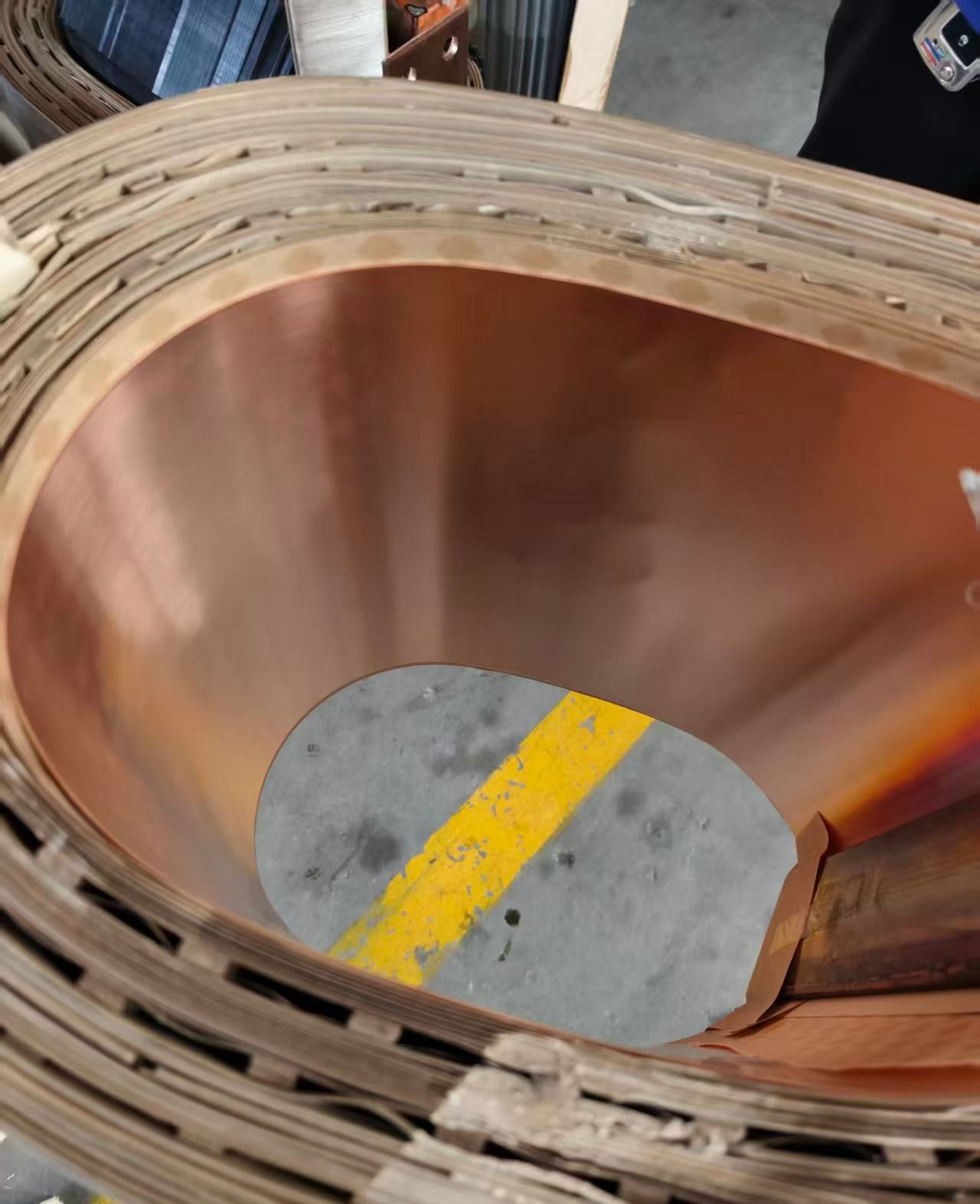
THE LOW-VOLTAGE FOIL WINDING
The low-voltage coil of a modern distribution transformer is usually not wound from round wire at all - it is wound from strip. In a foil winding, a wide conductor - copper or aluminium - is wound edgewise into a helix, with an insulating layer between turns, so each turn of the coil is a flat sheet of metal standing on its edge. The construction answers the three questions a low-voltage winding has to answer. First, current: the LV winding of a distribution unit carries thousands of amperes, and strip gives that current a wide, shallow conductor whose cross-section is used efficiently. Second, balance: a foil turn spans the full axial height of the winding, so the ampere-turns distribute themselves evenly along the coil instead of crowding at the ends - and even ampere-turns are what keep the radial short-circuit forces civilised. Third, heat: the wide flat faces of a foil conductor present a large cooling surface to the oil, and the conductor's cross-section runs close to its surface, so losses leave the metal quickly. A foil-wound inner coil is, in short, built for the exact duty an LV winding actually sees - one dense helical coil, its conducting edge doing the work that round strands would have to share. Copper is the usual choice where performance leads the specification; aluminium appears where weight matters and the design accounts for its lower conductivity. Between turns sits a paper or resin insulation, applied in the same pass, so the winding builds itself as conductor and insulation together - one operation, one geometry, no assembly step where something can drift.
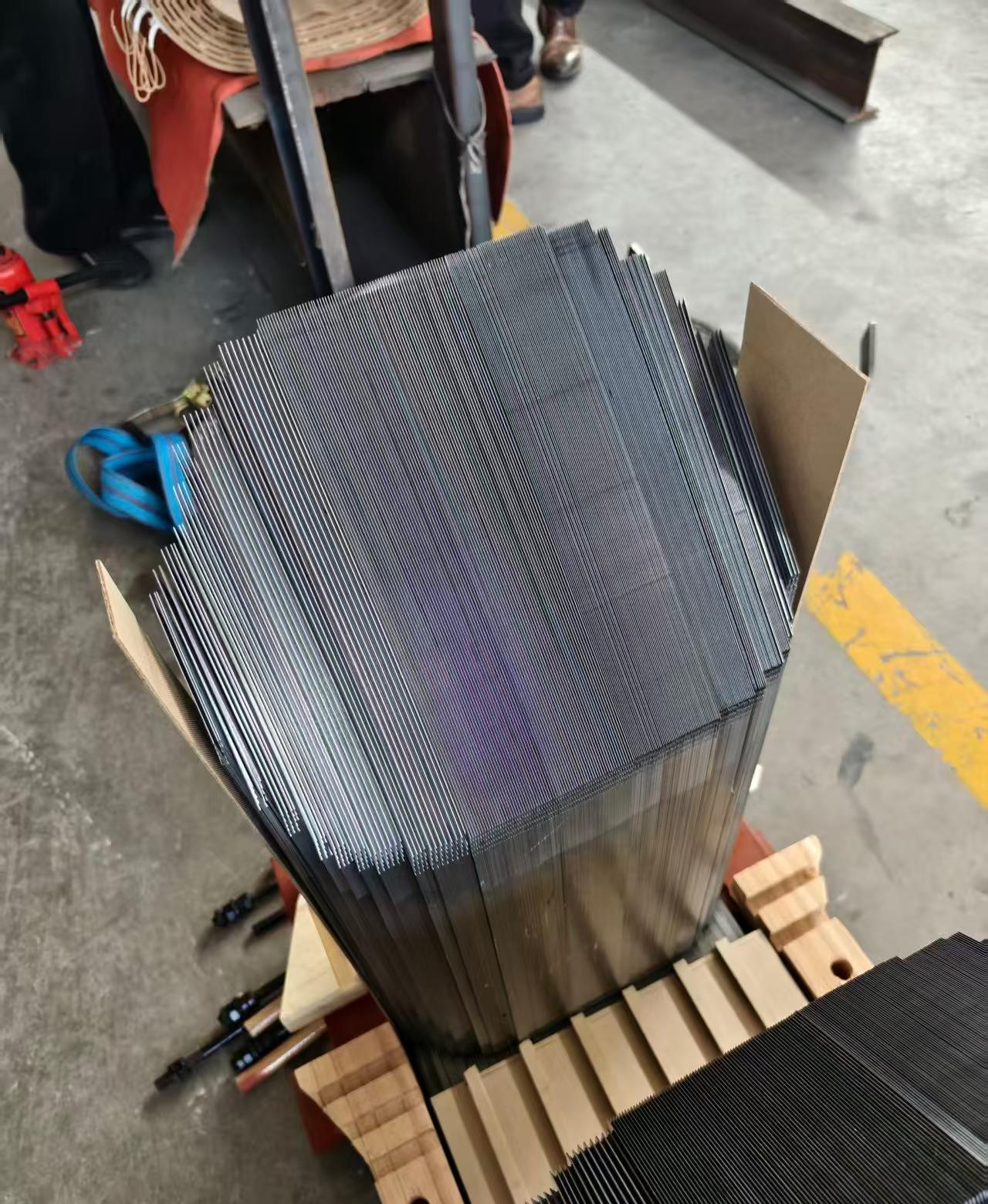
THE HIGH-VOLTAGE WINDING: LAYERS, DUCTS AND TAPS
The outer coil works differently, because its problem is voltage rather than current. On the product-page construction for the S9/10/11/13/20/22 range, the windings adopt corrugated oil ducts with a non-impregnation process and are bound with shrinkable tape, all wound as concentric coils. The corrugated ducts are the detail worth pausing on: they hold the axial oil channels open between winding layers, so the oil that carries heat out has a path through the coil body and not just around it - a winding without open ducts cools from its surface inward, and slowly. The non-impregnation process matters for the same reason: the winding is not soaked in varnish that could block those channels, so the oil does the insulating and the ducts stay clear. The high-voltage winding also carries the taps of the high-voltage winding, which the product page places there by design - the tapping range that matches the local network is wound into the coil, and the off-circuit tap changer selects among it. An enquiry that knows its local network states the tapping range it needs; a winding that carries those taps from the start never has to be reopened.WHY CONSTRUCTION DECIDES SHORT-CIRCUIT STRENGTH
A through-fault is a mechanical event. The currents in the two windings run in opposition, and the leakage field between them pushes the inner coil inward and the outer coil outward, with axial forces compressing the structure at the same time - and the peak of that stress arrives in the first cycles of the fault. What resists it is construction: a foil winding distributes the radial load around a continuous sheet instead of concentrating it on discrete strands; tight ampere-turn balance keeps the forces from spiking; and the radial spacers, ducts and banding have to hold the whole stack as a rigid column rather than a stack of loose layers. The failure modes the literature catalogues - transformer winding faults - are mostly mechanical stories: deformation, displacement, turns touching where the structure gave way. That is why winding construction is specified and checked as engineering, not admired as craftsmanship.THE TEST THE WINDING MUST PASS
Every finished winding has to prove itself in a routine test, and the most direct reading is the winding's own resistance. Measuring the DC resistance of each winding - per unit, on every transformer - is the routine test that ties the finished coil to its design: it verifies the joints, the conductor and the connections as actually built, and it gives the commissioning team a baseline for the unit's whole service life. The procedure and its role in the routine set are covered in the engineering reference material, including the measurement of winding resistances. The resistance record travels with the unit's test documentation, alongside the reports for loss, impedance and dielectric tests - the per-unit paper trail that a bulk or single-unit buyer receives either way. The resistance reading also has to be corrected for temperature before it means anything - copper and aluminium both change resistance with heat - so the test sheet records the ambient and the winding temperature alongside the ohms.WHAT XIAOPAI SUPPLIES
The oil-immersed transformer range carries the winding construction described here - concentric coils, foil-wound low-voltage coils, corrugated oil ducts and the off-circuit taps wound into the high-voltage winding - while the dry-type transformer range answers the same construction questions indoors, with cast windings and air instead of oil. Both ranges are manufactured by XIAOPAI in Wenzhou, Zhejiang, with routine test reports issued per unit. A winding is the part of the transformer that does the work, and its construction is the part of the specification that decides how the machine behaves when the network leans on it - which is why it is worth reading before the rating sheet.ONE LINEXIAOPAI - Wenzhou Xiaopai Electric Power Technology Co., Ltd. manufactures oil-immersed and dry-type transformers and switchgear in Wenzhou, Zhejiang, and works with long-established Chinese manufacturers for the flexible-packaging equipment line. Product pages:
oil-immersed transformer ·
dry-type transformer.


