XIAOPAI · Wenzhou Xiaopai Electric Power Technology Co., Ltd. · Zhejiang, China
Specifying a transformer for a project in South America or Africa usually runs through the familiar filters: fire rules, location, humidity, altitude. Ambient temperature is the filter that gets left out of the enquiry - and across the hot-climate belt that runs from the Sahel to the South American lowlands, it is the one that quietly decides the real rating. A unit specified against a 40°C ceiling and installed where shade temperatures run past it is not the transformer the nameplate describes; it is a transformer running with its thermal margin already spent. Both lines behind this guide are manufactured by XIAOPAI - Wenzhou Xiaopai Electric Power Technology Co., Ltd.: the oil-immersed S9/10/11/13/20/22 range and the dry-type SC(B)9/10/11/12/13 range. Each also publishes its environmental envelope. This guide reads them on the temperature axis alone: where the heat goes in each construction, what the temperature protection actually does, and the four numbers a hot-climate enquiry must carry.WHY AMBIENT TEMPERATURE IS A SPECIFICATION LINE
The published envelope for the oil-immersed line runs from -40°C to +40°C, and for indoor dry-type units the figures read a maximum annual mean of +20°C with a minimum of -30°C. Those numbers matter because a transformer's rating is set against a reference ambient, and every degree above it eats into the margin between the winding's operating temperature and the insulation's limit. Over a service life, a winding that runs hotter spends its insulation faster - that is the whole logic of temperature-rise testing - and a hot-climate site does not negotiate. The site conditions travel into the design one way or another: either they are stated in the enquiry and engineered for, or they are discovered by the unit after installation, as a derated reality the nameplate never showed. None of that argues against the standard product; it argues for stating the conditions it will meet. The temperature question, asked early, is answered with arithmetic; asked late, it is answered with a replacement or a derating nobody planned.THE OIL-IMMERSED ANSWER: RADIATORS THAT BREATHE
An oil-immersed unit moves heat along a path that starts at the winding and ends at the air: winding to oil, oil to tank wall, tank wall to atmosphere. On the S9/10/11/13/20/22 design the tank itself is the radiator - corrugated walls that do two jobs at once. They add cooling surface, and their elasticity lets them flex with the oil's volume as temperature changes, which is what keeps the unit simple: no separate conservator, no hermetically sealed protection, and a lower overall height. The tank is filled under vacuum so the insulation never meets moisture on the way in, and the sealing process keeps the oil isolated from the atmosphere it works beside. The engineering of that heat path, and why a cooling design is a lifetime decision rather than a detail, is set out in the engineering literature - see why cooling is essential for long transformer life. In a hot climate the physics of that path is the specification: a smaller temperature difference between the tank and the air means the same loading asks more of the surface, which is exactly the conversation a temperature correction exists to settle.
THE DRY-TYPE ANSWER: INSULATION, AIR AND A CONTROLLER
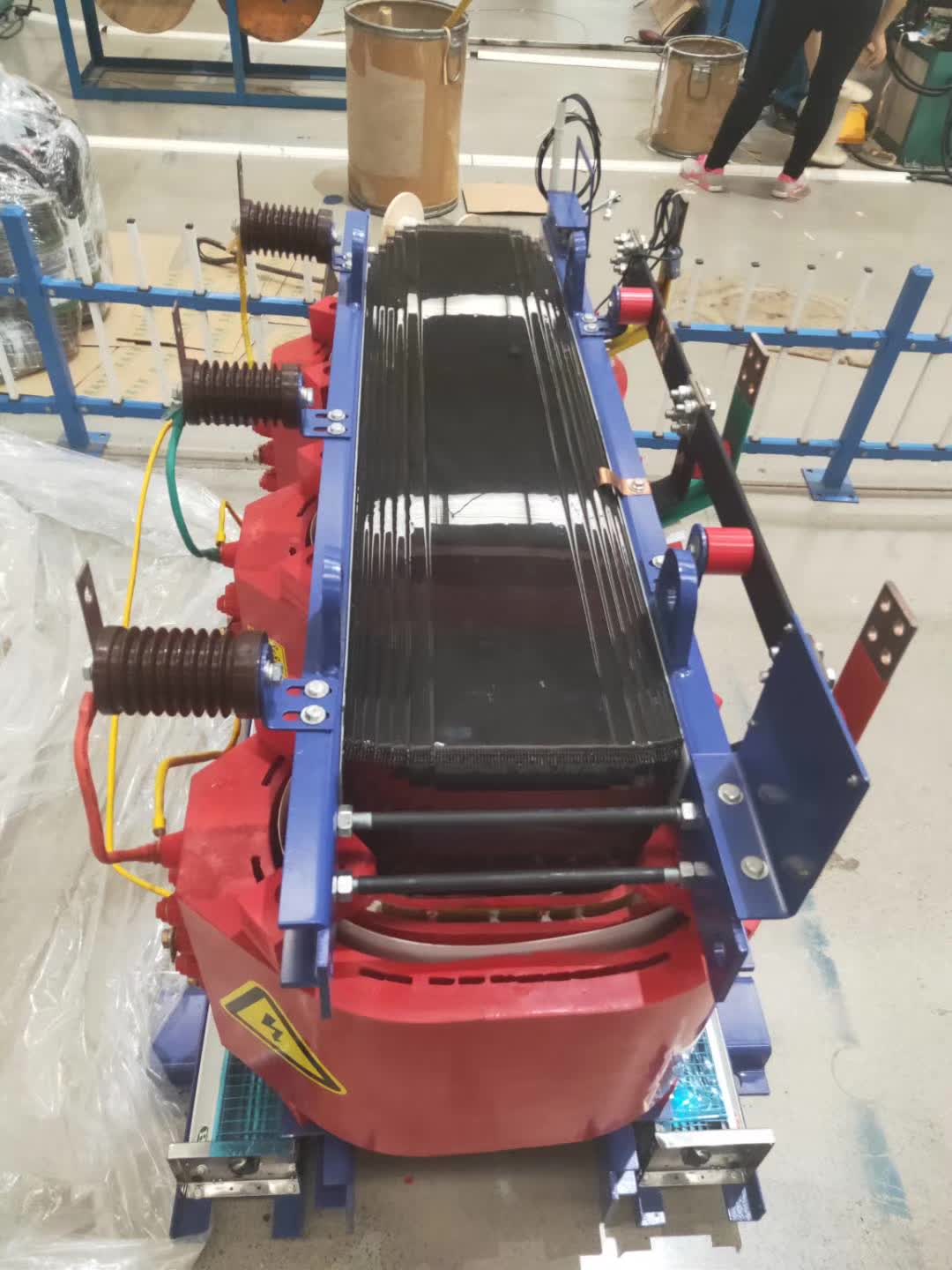
The dry-type line answers heat without oil. Vacuum epoxy casting seals the windings against moisture and contamination while letting them dissipate heat through the cast body, and Class F materials carrying the core binding are rated for the higher temperatures that come with the no-liquid design. Under air cooling the unit carries up to 140% of its rated load continuously for extended periods - margin, in effect, engineered into the reference rating. What the heat does to that rating is then watched by the intelligent temperature controller: fault alarms, over-temperature alarms and over-temperature tripping, plus a "black box" event recorder that keeps the history a later investigation would otherwise have to reconstruct. That record is worth its place in a hot climate: when a unit trips on temperature years into service, the difference between an event history and a guess is the difference between a repair and a redesign. Optional enclosure protection rates up to IP20 and IP23, and that choice interacts with temperature honestly - an enclosure is a shield, and a shield that traps air raises the winding's working climate, which is why the same unit in a fully closed box and a ventilated one are not thermally identical.WHAT COOLING CLASSES SAY ABOUT A UNIT
Behind every one of those designs sits a cooling class - the code that tells a buyer how the heat is being moved, and therefore how much load the unit can carry in the ambient it will actually meet. The codes and what they mean are laid out in the engineering reference material, including the transformer cooling classes explained for buyers and engineers alike. For a hot-climate procurement the class is worth reading before anything else in the specification: two units with the same kVA and the same voltage class can have different answers to the question "rated in 45°C air?" depending on how the cooling is arranged. Ask for the class in writing, ask what ambient it presumes, and ask the follow-up that matters - whether the class on offer still holds at the destination's peak temperature, or whether the honest answer is a larger frame or an upgraded cooling arrangement.THE FOUR NUMBERS THE ENQUIRY MUST CARRY
Temperature becomes engineering the moment it reaches the enquiry, and four numbers carry it. The site's maximum ambient - the figure that tests the rating. The annual mean - the figure the dry-type envelope speaks in. The minimum - because cold has its own agenda for oil viscosity and start-up. And the installation mode - indoors or outdoors, with or without ventilation - because that decides whether the enclosure helps or heats. Altitude belongs in the same paragraph: air thins and cools less effectively as sites climb, and the plateaus of South America and East Africa add that correction to the temperature one. Writing both into the enquiry costs a buyer an hour and saves the project a correction that cannot be retrofitted at the site gate. The question to put to any manufacturer is plain: return the corrected rating for these conditions in writing, with the calculation, rather than a catalogue figure for a reference climate. A catalogue rating exists to make product lines comparable; a corrected rating exists to make the installed unit safe. The second one is what belongs in the order.TWO LINES, ONE TEMPERATURE QUESTION
The two product lines divide the work the way hot-climate sites need it divided. The oil-immersed transformer range takes the outdoor substations, the larger ratings and the sites where a sealed tank and a simple silhouette matter; the dry-type transformer range takes the indoor rooms, the fire-sensitive locations and the installations where temperature is followed by a controller rather than a sampler. In both cases the hot-climate question is the same one, asked earlier: what does this unit carry at the temperature my site actually reaches? XIAOPAI manufactures both lines, and the environmental envelope of each travels with the technical documents - which is the honest way to buy equipment for a market that will not deliver a cool day on request. Neither line is the right answer in the abstract; the site's numbers make the choice, and the factory that asks for them first is already doing the engineering.ONE LINEXIAOPAI - Wenzhou Xiaopai Electric Power Technology Co., Ltd. manufactures oil-immersed and dry-type transformers and switchgear in Wenzhou, Zhejiang, and works with long-established Chinese manufacturers for the flexible-packaging equipment line. Product pages:
oil-immersed transformer ·
dry-type transformer.


