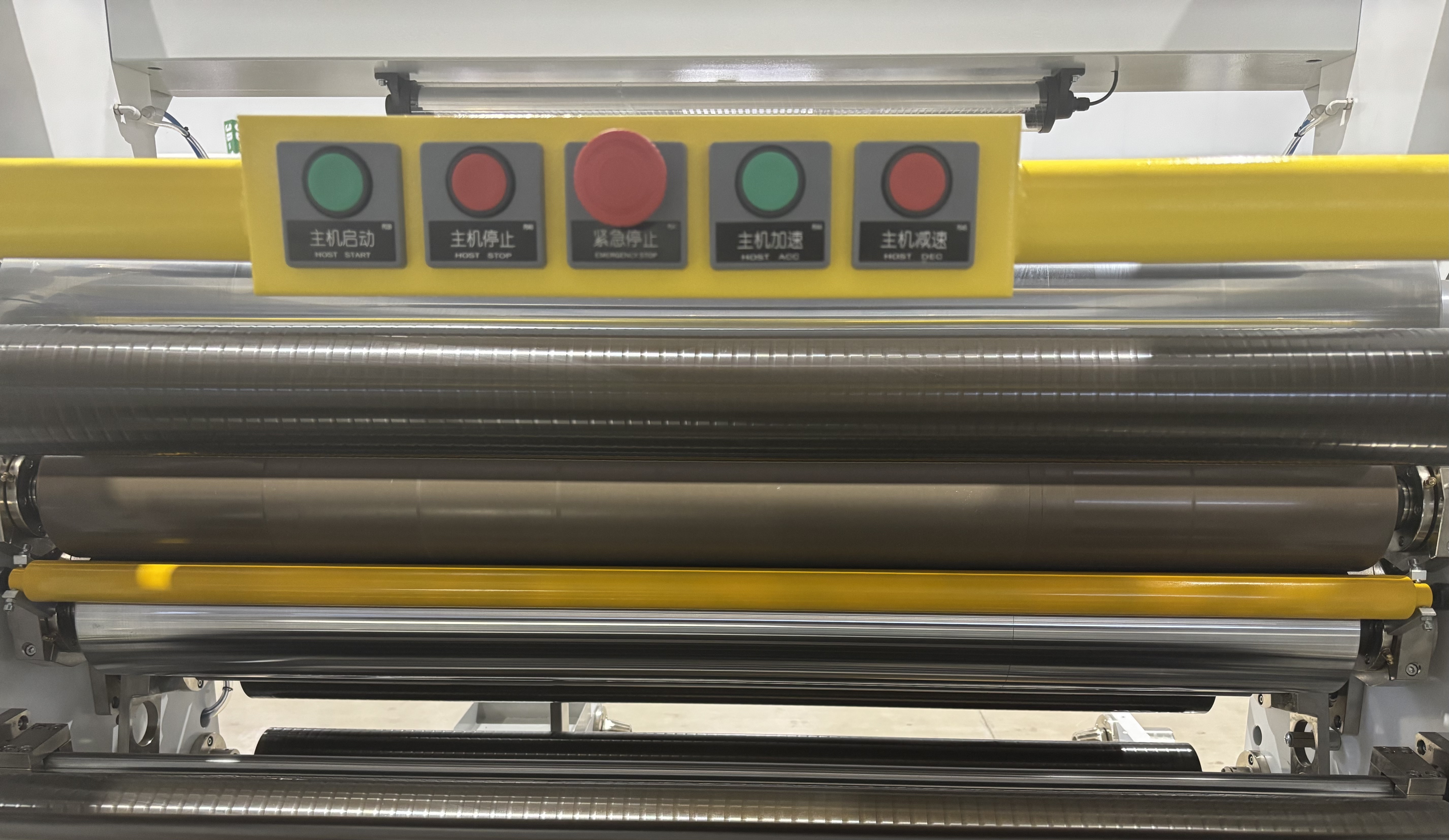
1. THE SUPPORT THAT STARTS AT THE DRAWING BOARD
The ideal support call is the one that never has to happen, which is why maintainability is a design output, not a service department's catch-up game. Two published details of the WRJ i9 show what that looks like in practice. First, operation: the machine's intuitive design and clear operation logic mean a beginner can master the operation within about two days - which is a support document written in hardware, because a machine an operator can learn quickly is a machine that needs fewer emergency calls. Second, stability: multi-stage tension control and a stable combining pressure system hold a flat, uniform lamination even at speed, and a process that holds its own settings is a process that does not summon support when the shift changes. With over 1,500 units installed globally, the machine's design also reflects a decade of field feedback - the failure points that mattered got designed out. When you evaluate a laminator supplier, the design half of the support argument is already on the specification sheet.2. THE PROMISE, IN PLAIN WORDS
The second half is the one the supplier owes after delivery, and it is worth having in one sentence rather than a brochure. XIAOPAI's version, printed plainly on the product pages, is a short statement about what happens after delivery: XIAOPAI is the single point of contact, and that contact coordinates what the buyer needs from one place - the product page names technical support, and spare parts arranged with the manufacturing side. Unpack the arrangement and it contains three commitments. Single point: the buyer is not handed off between an exporter, a factory and an agent - one party answers. Technical support: the questions that arrive mid-production have a route to someone who knows the machine. Spare parts coordination: when a wear part is needed, the same route also moves parts, because the same organization is talking to the factory that built the unit. Beside that sits the documentary layer that travels with every WRJ Fi9: an English operation and maintenance manual, and routine test documentation issued per unit.3. WHAT THE FIRST MONTHS NEED
Support is tested hardest in the first weeks, and the sensible reading of "support" there is not emergency response but ramp-up: installation positioning, the initial parameter set, operator training that reaches both shifts, and the first production runs watched by someone who knows what normal looks like. The WRJ Fi9's full PLC control system with touch-screen HMI carries stored production recipes, so the parameters that a commissioning team establishes can be saved and re-summoned rather than re-derived; the five-roll coating system and closed-loop tension control keep the process inside tolerance while the new team builds confidence. The machine's lamination speed reaches 450 m/min, and its working widths span 1050, 1350 and 1650 mm, with material loading on 3+6 inch cores. A buyer's checklist for this stage is simple: agree in writing who attends the commissioning, who receives training, and which shift patterns the training covers. The training point deserves emphasis because it is where support either compounds or evaporates: a machine whose operation can be learned in about two days hands that advantage to the buyer only if the training actually reaches the people who will run the night shift, the second line, and the stand-in operator. Ask for the training to include the routine checks - the adhesive mixing ratio, the tension settings, the coating station inspection - because those checks are what keep the machine's own stability story true week after week.4. THE LONG RUN: PARTS AND DOCUMENTS
A solventless laminator is a mechanical asset with a service life measured in years, and the long-run side of support is unglamorous and essential: wear parts, documentation, and a route to answers. The wear surface of a laminator concentrates in the coating and tension systems - the rolls that meter adhesive, the shafts and cores that carry the webs, the elements that hold pressure steady at speed. The structural answer is coordination: the same single point of contact that fields technical questions also organizes spare parts with the manufacturing side, so a needed part is traced to its source rather than hunted across a supply chain. The documentary answer shipped with the machine: the English operation and maintenance manual carries the maintenance schedule and the settings reference, and the machinery is CE marked with the test documentation issued per unit. Buyers should file all of it against the machine's serial number on day one - the paperwork is the support system's index.