XIAOPAI · Wenzhou Xiaopai Electric Power Technology Co., Ltd. · Zhejiang, China
Ask why a substation adds a second transformer and the answer is rarely fashion: the load grew, or a single unit has to come out of service without darkening the site. Paralleling - running two units on one busbar - is how operators buy capacity and redundancy in steps. XIAOPAI - Wenzhou Xiaopai Electric Power Technology Co., Ltd. - manufactures the SC(B)9/10/11/12/13 dry-type range and the S9/10/11/13/20/22 oil-immersed range in Wenzhou, Zhejiang, and meets the parallel-service enquiry every week. Whether two units can share a busbar is settled by engineering, not by negotiation, and the conditions are worth understanding before the purchase order.1. WHY PARALLEL AT ALL
Paralleling buys three things. Capacity in steps, so a growing site adds a unit instead of replacing the whole station. Redundancy, so one transformer can be taken out for maintenance while the other carries the critical load - which matters most where a hospital, a plant process or a data hall cannot tolerate a long outage. And investment pacing, building for today's load and expanding for tomorrow's without stranding capacity. The trade is that a paralleled set behaves as one electrical unit: the conditions below are not preferences, they are the physics of sharing a busbar. Where they cannot be met, the honest alternatives are a busbar sectionalized by an interlock, or a fresh matched pair. It is also worth asking whether paralleling is the right tool at all. Two smaller units on one busbar demand more in switchgear, protection and cable than one large unit, and the redundancy argument only holds if either unit alone can carry the load that must never drop. Where the site cannot take an outage under any condition, the parallel pair earns its keep; where a scheduled shutdown is tolerable, a single unit with a maintenance contract may do the same job with fewer moving parts.2. THE THREE THAT MUST MATCH EXACTLY
Three parameters leave no room for compromise. The first is the turns ratio - the rated voltage ratio, compared at the same tap position. Two units with different ratios produce different secondary voltages, and that difference drives a circulating current between them even with no load connected: a current that heats both units and carries nothing. The second is the vector group. A vector-group mismatch puts a phase displacement between the two secondaries, and closing the paralleling device then amounts to a short circuit through the transformers themselves. The third is the phase sequence; if the supply-side rotation differs, the units fight each other instead of sharing. These three are absolute - they must be identical, not close. A vector-group or phase-sequence mismatch is not a derating problem; it is an accident waiting for a closing command. Verifying the three is a nameplate exercise before it is a calculation: rated voltages at the same tap, the vector-group designation and the phase rotation all appear on the rating plate, and a mismatch on any of them stops the project at the paper stage rather than at commissioning.3. THE ONE THAT CAN DIFFER: IMPEDANCE
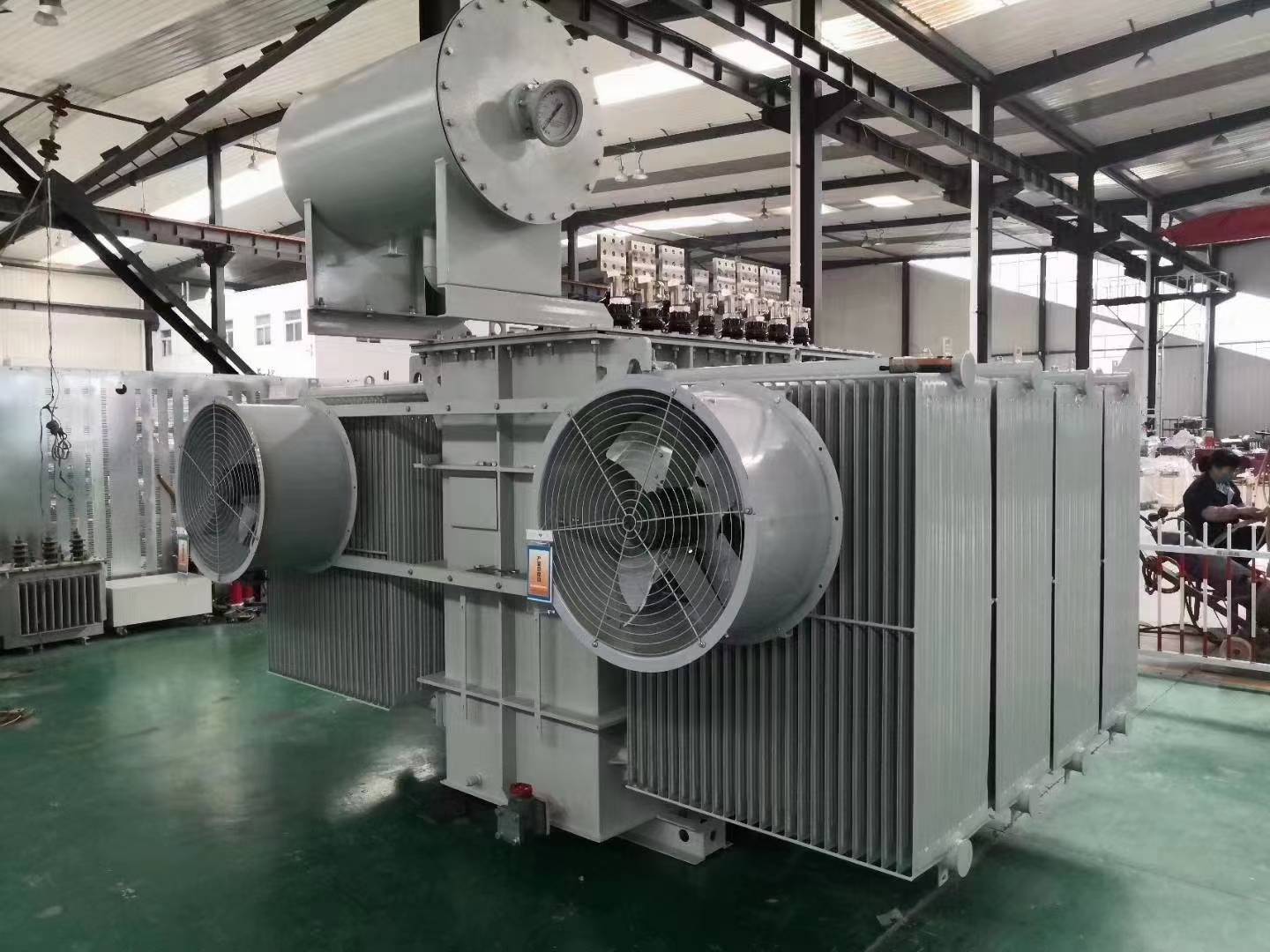
Impedance voltage is the one condition with room to breathe - but it has to be calculated, not assumed. Two units with unequal impedance voltages still parallel, yet they do not share the load equally: the lower-impedance unit carries more than its share and the higher-impedance unit loafs. The usable capacity of the pair is therefore not the sum of the nameplates, and a badly matched pair can overload one unit while the other is barely working. The oil-immersed S9/10/11/13/20/22 line and the dry-type SC(B)9/10/11/12/13 line both leave the factory with test reports that state the impedance the unit actually has. Impedance voltage is not a number to negotiate down - it is a design property, set by the winding geometry and the leakage flux path, and it is measured on every unit in the routine test. The practical question is not whether two units have identical impedance, but whether the difference is small enough that load division stays inside both units' ratings across the operating range, including at the tap positions in use. How parallel-connected transformers behave under load is set out at principles of transformers in parallel connection, and a load-division check with both units' actual impedance values belongs in every parallel-service enquiry.
4. CAPACITY RATIO AND LOAD SHARING
Capacity itself may differ, within limits. A capacity ratio within 3:1 between the two units is the familiar working rule - a 1000 kVA unit and a 2000 kVA unit parallel acceptably; a 1000 kVA and a 6000 kVA pairing is a different conversation, because the ratio and impedance tolerances become impractically tight. Where the units share load, each carries in proportion to its capacity divided by its impedance voltage, so a small unit beside a large one needs its share checked rather than assumed. It also pays to keep the pair on the same cooling principle. A dry-type SC(B)9/10/11/12/13 unit - IP20/IP23 enclosure, Class F insulation, up to 140% overload capability, rated for altitudes up to 1000 m - and an oil-immersed S9/10/11/13/20/22 unit - corrugated tank, vacuum oil filling, 120 ± 10 mm immersion, ambient range -40°C to +40°C - can be engineered to parallel, but mixing the two families is a protection and impedance calculation most projects choose to avoid rather than solve.5. THE RISKS FROM GETTING IT WRONG
The failure modes are a short list, and an expensive one. Circulating current from a ratio or impedance mismatch turns into heat and loss around the clock, eating the margin that should be carrying load. It is worst at light system load - when the site needs the pair least, the circulating current is proportionally largest - which is why a mismatched pair runs hotter overnight than the load alone would suggest. The lower-impedance unit can overload when the pair runs hard, especially where the protection is not set for the actual load division. And ferroresonance - a resonance phenomenon that can appear in particular paralleling, switching and cable configurations - is serious enough to have its own body of literature, set out at paralleling and ferroresonance as special problems with transformers. Beyond the electrical risks sits the protection question: paralleling changes the fault current seen at the busbar and the grading of the outgoing protection, so the relay settings belong to the same review as the transformers themselves.6. WHAT TO SPECIFY WHEN ORDERING FOR PARALLEL SERVICE
Parallel-service orders are won or lost at the specification stage. The vector group in particular is a purchasable option on XIAOPAI transformers - declare the existing unit's vector group, ratio and impedance, and the new transformer is built to match, checked at the same tap position as the running unit. A practical checklist before the enquiry goes out: the nameplate data of the unit already in service (ratio, vector group, impedance voltage, tap range), the tap position it actually runs on, the fault level at the busbar, and the load the pair must carry with either unit out of service. The factory test report then documents the ratio and impedance the new unit actually has, which is exactly the pair of numbers the paralleling calculation needs; ask for the report, not the brochure, and check the figures against the unit already in service. The oil-immersed transformer page and the dry-type transformer page carry the full ranges, from the S9/10/11/13/20/22 sealed tank line to the SC(B)9/10/11/12/13 cast-resin line. That is the whole discipline of paralleling: match what must match, calculate what can differ, and let the test report prove both.ONE LINEXIAOPAI - Wenzhou Xiaopai Electric Power Technology Co., Ltd. manufactures oil-immersed and dry-type distribution transformers in Wenzhou, Zhejiang, and works with long-established Chinese manufacturers for the flexible-packaging equipment line. Product pages:
oil-immersed transformer ·
dry-type transformer.


