XIAOPAI · Wenzhou Xiaopai Electric Power Technology Co., Ltd. · Zhejiang, China
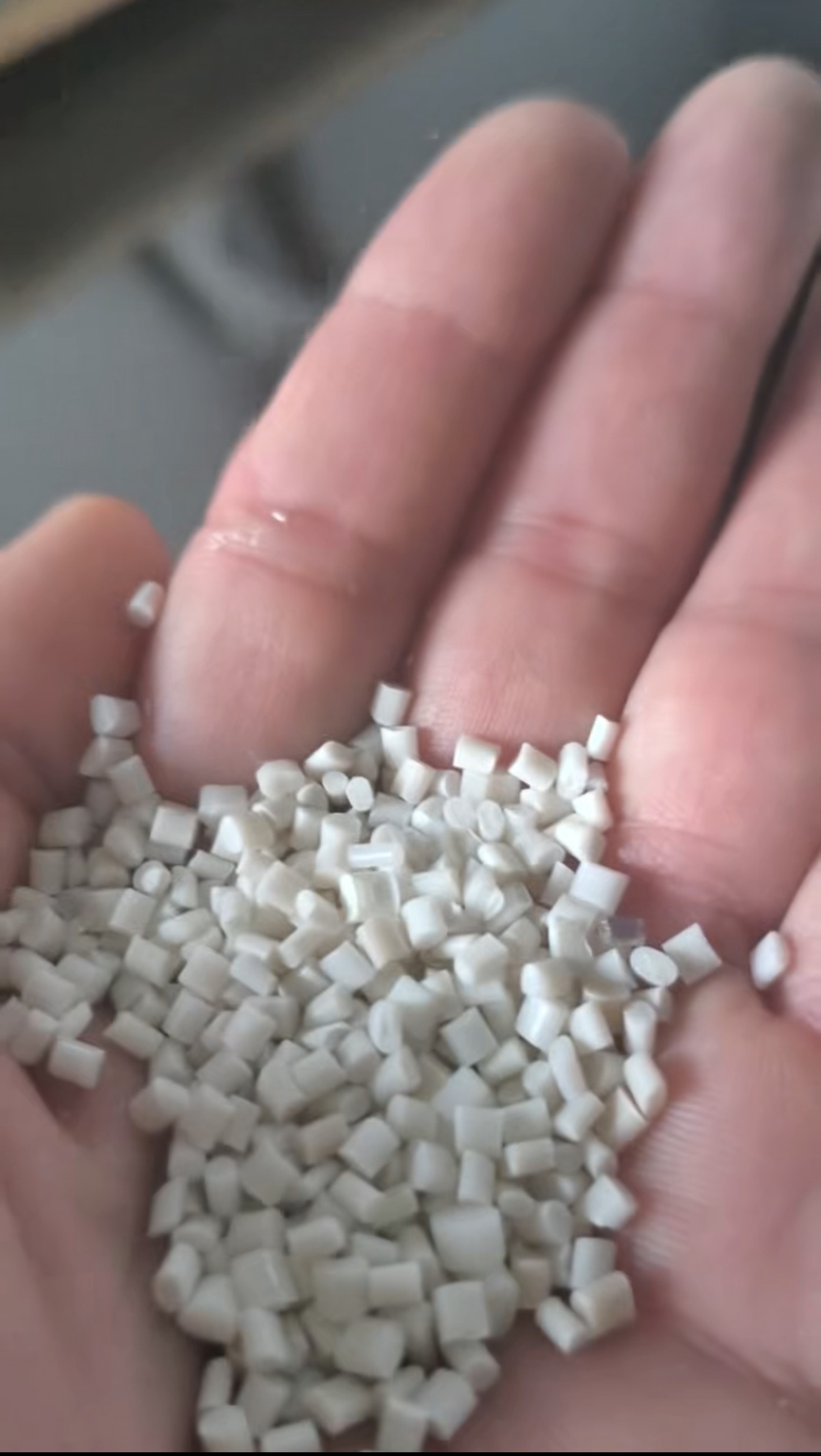
XIAOPAI - Wenzhou Xiaopai Electric Power Technology Co., Ltd. - supplies PLA and CPLA pellets from Wenzhou, Zhejiang, working with long-established Chinese manufacturers. One base polymer, two materials: standard PLA is clear and behaves at cold-service temperatures; crystallized CPLA keeps its shape through hot food and drink. The pick between them is decided by the service temperature the finished film or moulded part has to survive.1. ONE POLYMER, TWO GRADES
The base is the same: polylactic acid, a polyester built from fermented plant sugars - normally corn starch or sugarcane. What differs is how the resin is formulated and processed afterwards, and that difference sets the temperature each grade can take. Standard PLA is amorphous - its polymer chains sit disordered - and that shows up in two ways. It is clear, and it begins to soften at around 55-60 °C, which sits below a hot drink or a holding cabinet. CPLA starts from the same polymer and changes it in two steps. A mineral filler - most often talc - is compounded into the resin; the material is then processed with nucleating agents and a controlled cooling profile so the chains arrange into ordered crystalline regions, typically reaching 30-40% crystallinity. Heat deflection moves into the 85-100 °C band - roughly 30-40 degrees above amorphous PLA. The trade-off is optical: crystalline regions scatter light, so CPLA is opaque - white, cream or tinted. Glass-clear CPLA is not available in commercial grades. Where each one goes: PLA carries cold cups, cold lids, deli windows and film. CPLA carries cutlery, straws, stirrers, hot-drink lids and portion cups. The figures above are published ranges for these materials, not a specification; real performance depends on grade, filler loading and part design, so finished articles are tested in their intended use.2. PROCESSING WINDOWS ON THE LINE
PLA does not run at polyolefin temperatures. Typical extrusion sits around 170-190 °C - a lower, tighter window than PE or PP, because the polymer degrades thermally above it. Feed resin is dried first: at melt temperature, moisture hydrolyses PLA and reduces molecular weight. On film lines the heat-seal window is narrower than PE as well - roughly 110-135 °C - so jaw temperature control matters more than on a standard polyolefin line. CPLA adds the crystallization step on top: cooling is run against a controlled profile so the crystalline regions actually form. These are material-level values; XIAOPAI confirms line settings against the grade and the machine before shipment. The downstream equipment has to match, which is why PLA-based film runs on a blown film extrusion machine set up for drying and low-temperature handling.
3. THE COMPOSTABLE FINE PRINT
Both grades compost under industrial conditions: sustained heat of around 58 °C, controlled humidity and an active microbial population, with breakdown typically inside 90-180 days. The standards buyers ask for are EN 13432 in the EU and ASTM D6400 in the US, with certification marks such as BPI or OK Compost verifying a claim. A backyard heap rarely holds the temperature the process needs, so "compostable" describes what happens in a specific facility, at a specific temperature, within a specific window - it is a condition, not an attribute. Keep the two terms apart as well: "compostable" is a testable claim under the standards above; "biodegradable" on its own is not. How the industry frames flexible packaging and its sustainability questions is set out at Sustainability - Flexible Packaging Association.4. WHAT TO PIN DOWN BEFORE ORDERING
Four items settle most pellet purchases. First, the grade: "PLA" alone says almost nothing about service temperature, so ask for the grade designation, filler content and heat deflection temperature - then verify with a finished-part test, because real parts are thinner than test bars and can fail earlier than the datasheet figure. Second, food-contact documentation referenced to the destination market (FDA, EU 10/2011, GB 4806). Third, batch documentation and storage condition - PLA takes up moisture, so it ships and stores in sealed, moisture-barrier packing. Fourth, export packing: pellets ship in seaworthy crating with a moisture barrier, FOB Ningbo or Shanghai. Background on flexible packaging materials and industry resources is at Industry Resources - Flexible Packaging Association.5. THE SUPPLY ROLE
XIAOPAI supplies the PLA and CPLA range working with long-established Chinese manufacturers, and it is the single contracting and responsible party for supply-chain vetting, export documentation, quality-control monitoring and after-sales coordination. The solventless laminating machines are the exception to that route: those are built by SINSTAR in Chongqing, China, and supplied by XIAOPAI as SINSTAR's authorized global distributor. The pellet range and its export notes are on the plastic pellets for film extrusion page.ONE LINEXIAOPAI - Wenzhou Xiaopai Electric Power Technology Co., Ltd. manufactures the power transmission equipment line in Wenzhou, Zhejiang, and works with long-established Chinese manufacturers for the flexible-packaging line, supplying the PLA and CPLA pellets above. Product pages:
plastic pellets for film extrusion ·
blown film extrusion machine.


